Can Hijama (Cupping Therapy) Help Improve Sleep Quality?

House of Nature Medical Center in Abu Dhabi

If you have spent more nights than you would like staring at the ceiling, you have probably tried the usual advice: darker room, less screen time, an earlier bedtime. When none of that fully works, it is natural to start looking at other options, and hijama, or cupping therapy, is one that keeps coming up.

Hijama is best known for easing muscle tension, but many people who try it also report sleeping better afterward. The connection makes sense on the surface: a more relaxed body is generally a body that finds it easier to sleep. But does the therapy itself actually support better sleep, or is the link more indirect?

This guide explains what hijama is, how it may support sleep, what a session looks like, and what the current evidence actually says.

Table of Contents

  1. What Is Hijama (Cupping Therapy)? A Quick Definition
  2. Why Poor Sleep Happens
  3. How Hijama May Support Better Sleep
  4. Types of Cupping Used for Sleep and Relaxation
  5. What to Expect During a Hijama Session
  6. Is Hijama Backed by Science?
  7. Who Can Benefit From Hijama for Sleep?
  8. Frequently Asked Questions

1. What Is Hijama (Cupping Therapy)? A Quick Definition

Hijama, also known as cupping therapy, is a traditional practice in which special cups are placed on the skin to create gentle suction. This suction draws blood toward the surface of the skin, which many practitioners believe helps release muscle tension, improve circulation, and support the body's natural healing process.

The practice has roots in several traditional medicine systems and has been used for centuries alongside other natural therapies. Today, it is often used to manage muscle tightness, stress, and general tension, the same areas that are closely tied to how well a person sleeps.

At House of Nature Medical Center in Abu Dhabi, our hijama sessions begin with a short consultation, so your practitioner understands your main concerns before choosing where and how to apply the cups.

2. Why Poor Sleep Happens

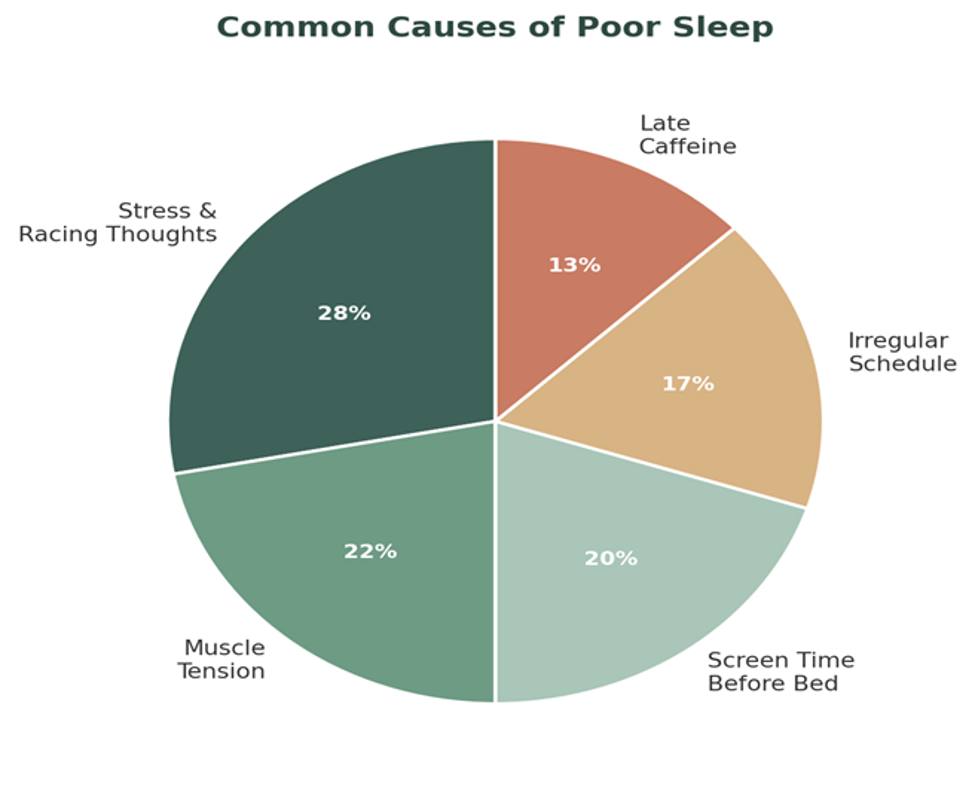
Sleep problems rarely come from a single cause. More often, they build up from a mix of physical tension, mental overstimulation, and daily habits that make it harder for the body to wind down.

common cases of poor sleep

Chart 1: Common everyday causes behind poor sleep

Notice how much of this list is physical, not just mental. Tight muscles and an overactive nervous system can keep the body in an alert state well past bedtime, which is exactly where a relaxation-focused therapy like hijama is thought to help.

3. How Hijama May Support Better Sleep

  • Releases physical tension. Suction therapy is commonly used to loosen tight muscles in the neck, shoulders, and back, areas that often hold the stress of the day.
  • Encourages relaxation. Many people describe a sense of calm during and after a session, similar to the effect of massage.
  • Supports circulation. Improved blood flow to treated areas is thought to aid the body’s natural recovery process.
  • Complements a wind-down routine. Scheduling a session in the evening can act as a signal to the body that it is time to slow down.

It is worth being clear that hijama is not a sleep medication and does not directly change brain chemistry the way some treatments do. Its potential benefit for sleep is understood mainly through relaxation and reduced physical tension.

4. Types of Cupping Used for Sleep and Relaxation

Not all cupping is the same. A practitioner may choose a different method depending on your main areas of tension and comfort level.

Type What Happens Commonly Used For
Dry Cupping
Suction is applied to the skin using cups, no incisions
General muscle tension and relaxation
Wet Cupping (Hijama)
Light, controlled incisions are made before suction is applied
Deeper muscle tension, circulation, traditional detox practice
Massage Cupping
Cups are gently glided across oiled skin
Loosening tight muscles along the back and shoulders
Fire Cupping
Heat is used briefly to create suction inside the cup
Warming tight, cold-feeling muscle areas

Table 1: Common types of cupping and what they are typically used for

5. What to Expect During a Hijama Session

A typical session is calm and structured, which is part of why many people find it relaxing rather than stressful.

Area Signs of Poor Sleep Signs of Restful Sleep
Falling Asleep
Lying awake, racing thoughts
Drifting off within 20–30 minutes
Muscle Tension
Tight shoulders, neck, or lower back
Body feels loose and relaxed
Night Waking
Waking often, hard to fall back asleep
Sleeping through with few interruptions
Morning Feeling
Groggy, stiff, low energy
Rested, alert, ready for the day

Table 2: Common signs of poor sleep compared with signs of restful sleep
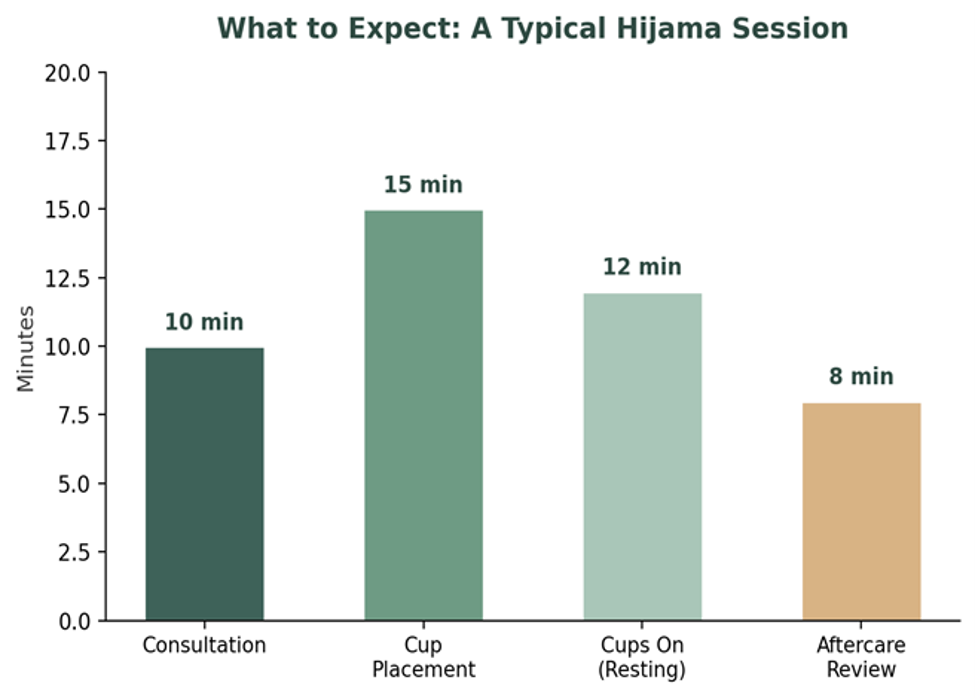
What to expect (a typical hijama session)

Chart 2: A typical breakdown of a hijama session

Most sessions last well under an hour from start to finish. Many people report feeling noticeably looser and calmer immediately afterward, which is often when the best evening wind-down routines begin.

6. Is Hijama Backed by Science?

Research on cupping therapy is still developing. Some studies suggest it may help with muscle pain, tension, and relaxation, and a relaxed body is generally better able to fall asleep.

However, research specifically on cupping and sleep quality is limited, and most existing studies are small. Cupping should be viewed as a complementary relaxation practice rather than a proven treatment for sleep disorders such as insomnia or sleep apnea, which need proper medical diagnosis and care.

A Note on Safety

Hijama should always be performed by a trained, licensed practitioner using sterile, single-use equipment. It is not recommended during pregnancy, for people with bleeding disorders or on blood-thinning medication, or over broken skin, without medical clearance first. If you have a diagnosed sleep disorder, such as sleep apnea, speak with your doctor before trying cupping as a complementary approach.

7. Who Can Benefit From Hijama for Sleep?

Hijama tends to appeal most to people whose sleep issues are closely tied to physical tension and everyday stress, rather than a diagnosed medical sleep condition.

  • People who carry visible tension in their neck, shoulders, or back
  • Those whose racing thoughts at night are linked to daily stress
  • Anyone looking for a natural addition to their evening wind-down routine
  • People who already enjoy massage or bodywork for relaxation
  • Beginners who are curious and want to try a low-commitment session

8. Frequently Asked Questions

Does hijama guarantee better sleep?

No single therapy can guarantee better sleep, since sleep is affected by many factors. Hijama may support relaxation and ease physical tension, which can make it easier to fall asleep, but it works best alongside good sleep habits.

Is hijama painful?

Most people describe a pulling or tight sensation rather than sharp pain. Wet cupping involves light incisions, which may cause mild, brief discomfort. A skilled practitioner will adjust the approach to your comfort level.

How often should I get hijama for sleep support?

This varies by person. Some people notice a benefit from a single session before a stressful period, while others prefer a session every few weeks as part of an ongoing relaxation routine.

Are there marks left after a session?

Cupping often leaves temporary circular marks where suction was applied. These usually fade within a few days to two weeks and are not typically painful.

How do I get started with hijama?

The best first step is a consultation with a trained practitioner who can review your health history and sleep concerns before recommending a session. At House of Nature Medical Center in Abu Dhabi, every session begins with this kind of personalised assessment.

Start Your Healing Journey

Experience natural, holistic care with our DOH-licensed experts in Ayurveda, Chiropractic, Naturopathy, and more—right here in Abu Dhabi.