
Yoga Therapy for Neck and Shoulder Tension
Tight neck and shoulders? Try these easy yoga therapy poses and daily habits to release tension, improve posture, and feel relaxed again.
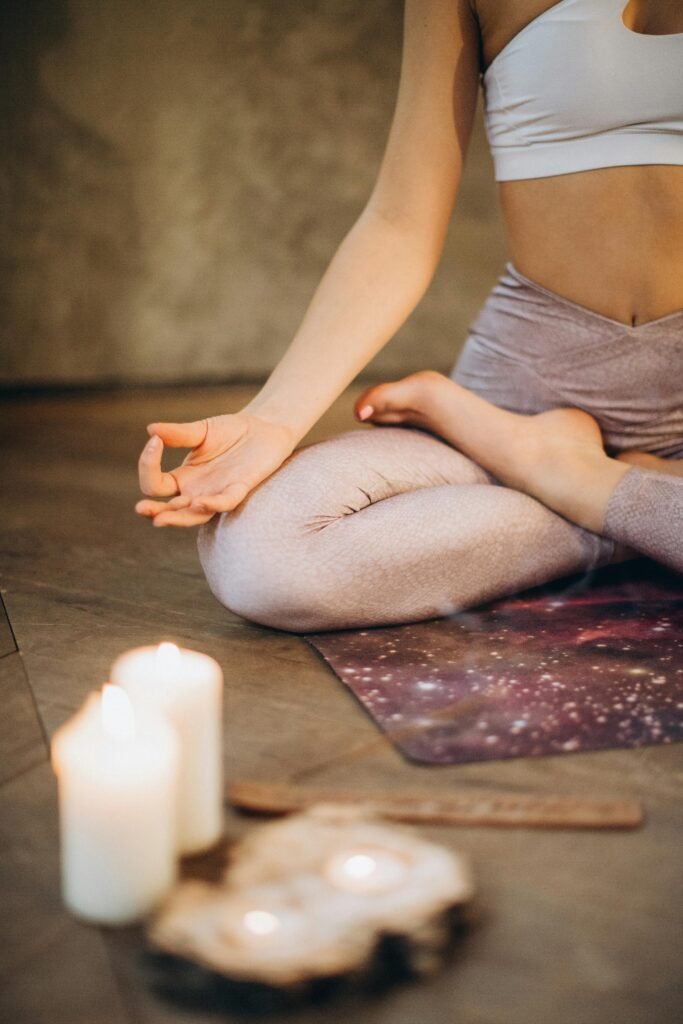
Do your neck and shoulders feel tight at the end of the day? Maybe you rub them without thinking, or roll your shoulders to get some relief. If so, you are not alone.
Long hours at a desk, hours on the phone, stress, and poor sleep can all leave your neck and shoulders stiff and sore. The good news is that you do not always need a big treatment to feel better. Yoga therapy offers gentle, simple ways to release tension and help your body move more freely.
In this guide, you will learn what causes neck and shoulder tension, how yoga therapy helps, and easy poses you can try at home or at work.
What Is Yoga Therapy?
Yoga therapy is the use of yoga poses, breathing, and relaxation methods to support health and ease specific problems. It is different from a regular yoga class. A regular class is usually made for a group. Yoga therapy is planned around your own body, needs, and goals.
A trained yoga therapist looks at how you move, sit, and breathe. Then they choose gentle practices that fit you. For neck and shoulder tension, the focus is on stretching tight muscles, strengthening weak ones, and calming the mind.
Why Do Neck and Shoulders Get So Tight?
Your neck and shoulders carry a lot of weight. Your head alone weighs about 4 to 5 kilograms (10 to 11 pounds). When you lean forward to look at a screen, the muscles in your neck and upper back have to work much harder.
The more you lean forward, the harder your neck works
Approximate load on the neck, by forward tilt of the head
0° (upright)
5 kg (12 lb)
15°
12 kg (27 lb)
30°
18 kg (40 lb)
45°
22 kg (49 lb)
60°
27 kg (60 lb)
Figure 1. Estimated load on the neck as the head tilts forward. Approximate values adapted from Hansraj (2014); real load varies by person.
Common causes of neck and shoulder tension include:
Sitting for long hours, especially with a bent back
“Tech neck,” which happens when you look down at your phone or laptop
Stress, which makes many people raise or tighten their shoulders without knowing it
Poor sleep position or a pillow that does not suit you
Carrying a heavy bag on one shoulder
Lack of movement during the day
Shallow breathing, which makes the neck muscles work harder
How Yoga Therapy Helps
Yoga therapy works in a few simple ways:
It stretches tight muscles. Gentle stretches help loosen stiff areas.
It builds strength. Strong back and shoulder muscles hold your body up better, so your neck does not have to work as hard.
It improves posture. You become more aware of how you sit and stand.
It calms the nervous system. Slow breathing helps your body relax, and relaxed muscles hurt less.
It increases body awareness. You learn to notice tension early and release it before it builds up.
Before You Begin: Simple Safety Tips
Stay safe while you practice
Move slowly and gently. Never force a stretch.
Stop if you feel sharp pain, numbness, tingling, or dizziness.
Breathe deeply and evenly through every pose.
Practice on a soft mat or a comfortable surface.
Wear loose, comfortable clothes.
If you have a neck injury, a disc problem, or ongoing pain, speak with a doctor or yoga therapist first.
10 Easy Yoga Poses for Neck and Shoulder Tension
Hold each pose for 5 to 10 slow breaths unless noted otherwise.
How long to hold each pose
Slow breaths (green) or repetitions (orange)
Neck Rolls
5–10
Ear-to-Shoulder
5
Shoulder Rolls
8–10
Cow Face Arms
5
Eagle Arms
5–10
Cat-Cow
8–10
Thread the Needle
5
Child’s Pose
5–10
Puppy Pose
5–10
Figure 2. Suggested hold length or repetitions for the nine breath-based poses. Supported Fish Pose is held for one to three minutes.
1. Neck Rolls (Gentle)
How to do it: Sit tall. Slowly lower your chin toward your chest. Then gently roll your right ear toward your right shoulder, then back to center, and over to the left side. Do not roll your head all the way back.
Why it helps: It loosens stiff neck muscles.
2. Ear-to-Shoulder Stretch
How to do it: Sit or stand tall. Tilt your right ear toward your right shoulder. Keep your left shoulder relaxed and down. Stay for five breaths, then switch sides.
Why it helps: It stretches the side of the neck, where many people hold stress.
3. Shoulder Rolls
How to do it: Lift both shoulders up toward your ears, roll them back, and then down. Repeat 8 to 10 times. Then roll them forward.
Why it helps: It warms up the shoulders and releases built-up tightness.
4. Cow Face Arms (Gomukhasana Arms)
How to do it: Reach your right arm up, bend the elbow, and drop your hand behind your back. Bring your left arm behind you and try to clasp your fingers. If you cannot reach, hold a towel or strap between your hands. Hold for five breaths, then switch.
Why it helps: It opens the shoulders and the upper arms.
5. Eagle Arms (Garudasana Arms)
How to do it: Stretch your arms forward. Cross your right arm over your left, bend your elbows, and try to wrap your forearms together. Lift your elbows slightly and breathe. Switch sides.
Why it helps: It stretches the upper back and between the shoulder blades.
6. Cat-Cow Pose (Marjaryasana-Bitilasana)
How to do it: Come onto your hands and knees. As you breathe in, lift your chest and look slightly forward (cow). As you breathe out, round your back and drop your head (cat). Repeat 8 to 10 times.
Why it helps: It moves the whole spine and relaxes the neck.
7. Thread the Needle
How to do it: From hands and knees, slide your right arm under your left arm, palm facing up. Rest your shoulder and the side of your head on the floor. Hold for five breaths and switch sides.
Why it helps: It gently twists the upper back and releases the shoulders.
8. Child’s Pose (Balasana)
How to do it: Kneel on the floor, sit back on your heels, and stretch your arms forward as you rest your forehead on the mat. Breathe slowly.
Why it helps: It calms the body and gently stretches the back and shoulders.
9. Puppy Pose (Uttana Shishosana)
How to do it: From hands and knees, walk your hands forward and lower your chest toward the floor, keeping your hips above your knees. Rest your forehead on the mat.
Why it helps: It opens the chest and shoulders, which often get tight from sitting.
10. Supported Fish Pose
How to do it: Lie on your back with a rolled towel or pillow lengthwise along your spine, or a small cushion under your upper back. Let your arms fall open to the sides. Stay for one to three minutes.
Why it helps: It opens the chest and lets the shoulders relax.
Where each pose works
Pose benefit map, based on the “Why it helps” notes above
Neck
Shoulders
Upper back
Chest
Spine
Calm
1 Neck Rolls
✓
2 Ear-to-Shoulder
✓
3 Shoulder Rolls
✓
4 Cow Face Arms
✓
5 Eagle Arms
✓
6 Cat-Cow
✓
✓
7 Thread the Needle
✓
✓
8 Child’s Pose
✓
✓
✓
9 Puppy Pose
✓
✓
10 Supported Fish
✓
✓
Figure 3. Pose benefit map: where each of the 10 poses works, based on the “Why it helps” notes above.
Want a yoga therapy plan made for you?
Book a one-to-one session with our yoga therapy team in Al Bateen.
Quick Desk Routine (5 Minutes)
Short on time? Try this at your desk:
Sit tall and take five deep breaths.
Do 8 slow shoulder rolls backward.
Do the ear-to-shoulder stretch on each side.
Do Eagle Arms on each side.
Finish with three more deep breaths.
Do this once in the morning and once in the afternoon. It can make a big difference over time.
Your 5-minute desk routine at a glance
Minutes per step (total 5)
0.75 min
Sit tall, 5 deep breaths
0.75 min
8 shoulder rolls back
1.5 min
Ear-to-shoulder, both sides
1.5 min
Eagle Arms, both sides
0.5 min
3 deep breaths
Figure 4. Suggested time split for the 5-minute desk routine.
Breathing Practice to Release Tension
Breathing is a big part of yoga therapy. Try this easy one:
Belly Breathing
Sit or lie down comfortably.
Place one hand on your belly.
Breathe in slowly through your nose for four counts. Feel your belly rise.
Breathe out slowly for six counts. Feel your belly fall.
Repeat for two to three minutes.
Belly breathing rhythm: out longer than in
Two breath cycles, about 1 count per second (20 seconds)
Breathe in
4 counts
Breathe out
6 counts
Breathe in
4 counts
Breathe out
6 counts
Figure 5. The belly breathing rhythm: in for four counts, out for six. Your belly rises as you breathe in and falls as you breathe out.
When you breathe deeply into your belly, your neck and shoulders do not have to work so hard to help you breathe.
Daily Habits That Prevent Neck and Shoulder Tension
Yoga works best when you also care for your daily habits:
Raise your screen to eye level so you do not look down.
Take a break every 30 to 45 minutes to stand and stretch.
Switch the shoulder you use to carry your bag, or use a backpack.
Check your posture. Keep your ears over your shoulders.
Stay hydrated. Tight muscles feel worse when you are dehydrated.
Sleep with a supportive pillow that keeps your neck in a neutral position.
Manage stress with quiet time, walks, or a hobby you love.
When to See a Professional
Gentle yoga can help with everyday tightness, but some signs need proper care. See a doctor if you have:
Pain that gets worse or lasts more than a few weeks
Numbness or tingling in your arms or hands
Pain after an injury or fall
Headaches that keep coming back
Weakness in your arms
If you are in Abu Dhabi, the yoga therapy team at House of Nature can guide you with a personal plan made for your body, your posture, and your lifestyle. A one-to-one session can help you learn the right poses and avoid mistakes.
Frequently Asked Questions
1. How often should I do yoga for neck and shoulder tension?
Short daily practice works best. Even 10 minutes a day is better than one long session each week.
2. How long before I feel relief?
Many people feel looser right after a session. Lasting change usually takes a few weeks of regular practice.
3. Is yoga safe if I have neck pain?
Gentle yoga is safe for many people, but it depends on the cause of your pain. Check with a doctor or yoga therapist first, especially if you have an injury or disc problem.
4. Do I need to be flexible to try yoga therapy?
Not at all. Yoga therapy is made for all levels. You can use props like a strap, towel, or cushion to make poses easier.
5. Can yoga help with stress headaches?
Yoga can help ease tension that builds up in the neck and shoulders, which is a common cause of stress headaches. If your headaches are strong or frequent, see a doctor.
Final Thoughts
Neck and shoulder tension can build up slowly, but it does not have to stay. With a few gentle poses, mindful breathing, and better daily habits, you can release stiffness and feel lighter.
Start small. Try just two or three poses today. Your neck and shoulders have carried a lot for you. Give them some care in return.
This article is for general information. It does not replace emergency or conventional medical care, and it is not a diagnosis.
Dr. Saranya Mayadevi
Naturopathy & Functional Medicine Practitioner
Indian Naturopathy and Yoga Graduate Medical Association – UAE and India (INYGMA)
Related articles
More reading from our doctors.
Book Your Consultation
Tell us how we can help and our team will call you back to arrange your appointment.
✓ DOH-licensed doctors
✓ Personalised treatment plans
✓ Call us: 02 585 7580