
Start Your Healing Journey
Experience natural, holistic care with our DOH-licensed experts in Ayurveda, Chiropractic, Naturopathy, and more—right here in Abu Dhabi.

| Feature | Regular Yoga Class | Yoga Therapy |
|---|---|---|
|
Group size |
Group size |
One-on-one or very small group |
|
Who leads it |
Yoga instructor |
Certified yoga therapist, often with doctor input |
|
Focus |
General fitness and flexibility |
A specific health condition or goal |
|
Plan |
Same routine for everyone |
Personalised plan based on your body and history |
|
Setting |
Studio or gym |
Clinical, medically supervised setting |
| 1-on-1 | Doctor-Linked | Low Risk | Evidence-Based |
|---|---|---|---|
|
Sessions built around your body and goals |
Coordinated with your existing medical care |
Gentle, adaptable movements for most ability levels |
Backed by growing clinical research worldwide |
| Session Type | Typical Price Range | What You Get |
|---|---|---|
|
Group yoga drop-in class |
AED 70 – 150 |
One class, shared with other students, general routine |
|
Monthly group membership |
AED 500 – 900 |
Unlimited or set number of group classes per month |
|
Private 1-on-1 yoga session |
AED 300 – 650 |
Personal attention, but usually fitness-focused, not clinical |
|
Yoga Therapy session (clinical) |
AED 300 – 600 |
Doctor-linked assessment and a plan for your specific condition |
|
Yoga Therapy package (6–10 sessions) |
AED 1,500 – 3,500 |
Structured programme with progress tracking and follow-up |
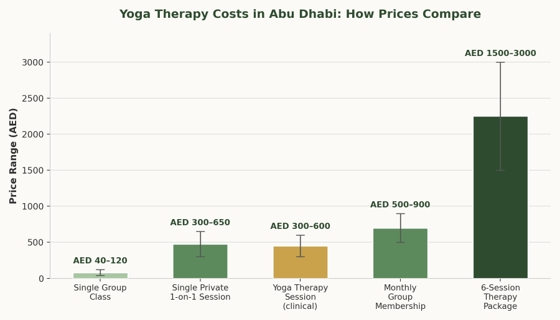
Figure 1: Approximate price ranges for yoga and yoga therapy options in Abu Dhabi. Actual pricing depends on the provider, session length, and package size.
| Benefit | How It Happens |
|---|---|
|
Less chronic pain |
Gentle, targeted postures relieve tension in the back, neck, hips, and joints |
|
Lower stress and anxiety |
Slow breathing techniques calm the nervous system and reduce cortisol |
|
Better sleep |
Evening relaxation practices help the body wind down naturally |
|
Improved flexibility and balance |
Consistent movement increases range of motion and reduces fall risk |
|
Stronger breathing capacity |
Breathwork (Pranayama) strengthens the lungs and improves oxygen flow |
|
Better posture |
Alignment-focused poses correct the effects of long hours at a desk |
|
Faster recovery from injury |
Guided movement supports healing without overloading the body |
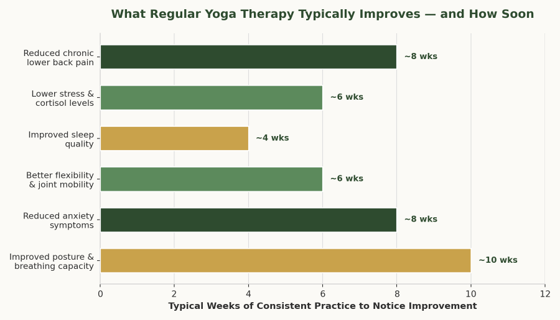
Figure 2: Typical timeframes at which patients begin to notice improvement with consistent, weekly Yoga Therapy practice. Individual results vary by condition and consistency.
| Condition Category | Specific Concerns | Yoga Therapy Focus | Typical Timeline |
|---|---|---|---|
|
Back and joint pain |
Lower back pain, sciatica, arthritis, neck stiffness |
Gentle strengthening, alignment, targeted stretching |
4–10 weeks |
|
Stress and mental health |
Anxiety, burnout, mild depression, insomnia |
Breathwork, guided relaxation, restorative poses |
4–8 weeks |
|
Women’s health |
Prenatal discomfort, menstrual pain, menopause symptoms |
Adapted poses safe for each life stage |
Ongoing, stage-based |
|
Cardiovascular and respiratory |
High blood pressure, asthma, low lung capacity |
Pranayama breathing, low-intensity movement |
6–12 weeks |
|
Post-injury or post-surgery recovery |
Sports injuries, post-operative stiffness |
Slow, guided rebuilding of strength and mobility |
8–16 weeks |
|
Healthy ageing |
Balance issues, low energy, joint stiffness in seniors |
Chair-adapted or slow-flow sessions for safety |
Ongoing |
| Feature | Yoga Therapy (House of Nature) | Regular Yoga Class |
|---|---|---|
|
Primary goal |
Treat a specific health issue |
General fitness and relaxation |
|
Personalisation |
Fully personalised to your body and history |
Same sequence for the whole class |
|
Who leads it |
Certified yoga therapist, doctor-linked |
Yoga instructor |
|
Setting |
Clinical, medically supervised |
Studio, gym, or outdoor group |
|
Progress tracking |
Reviewed and adjusted over time |
Rarely tracked individually |
|
Best for |
Chronic pain, stress, injury recovery, specific conditions |
General wellbeing and staying active |
| Phase | Stage | What Happens | Timeframe |
|---|---|---|---|
|
1 |
Initial Assessment |
Health history review, posture and mobility check, goal-setting with your therapist |
Week 1 |
|
2 |
Personalised Plan |
Your therapist designs a session plan built around your condition and lifestyle |
Week 1 |
|
3 |
Active Sessions |
Weekly one-on-one sessions combining postures, breathwork, and relaxation |
Week 2–8 |
|
4 |
Progress Review |
Your therapist checks progress and adjusts the plan as needed |
Week 4 and 8 |
|
5 |
Home Practice |
A simple routine you can do on your own between sessions |
Ongoing |
|
6 |
Maintenance |
Monthly or seasonal check-ins to keep progress on track |
Ongoing |
| Patient Profile | Why It Helps | Common Reasons for Visiting |
|---|---|---|
|
Desk workers and professionals |
Targets tight shoulders, neck, and lower back from long sitting hours |
Back pain, poor posture, stress |
|
New and expecting mothers |
Adapted poses support each stage of pregnancy and recovery |
Prenatal discomfort, postpartum recovery |
|
Seniors |
Gentle, low-impact movement improves balance and reduces fall risk |
Joint stiffness, balance concerns |
|
Athletes and active individuals |
Supports recovery and prevents overuse injuries |
Sports injuries, tight muscles |
|
Individuals under high stress |
Breathwork and relaxation calm the nervous system |
Anxiety, burnout, poor sleep |
|
People managing chronic conditions |
Works alongside medical treatment for long-term support |
Hypertension, arthritis, asthma |
Your first visit is longer than a regular class because it starts with an assessment. Here is what typically happens:
Wear comfortable, loose clothing you can move in. You do not need any yoga experience — sessions are built for complete beginners as much as experienced practitioners.
They overlap but are not identical. Physiotherapy focuses on rehabilitating an injury through structured exercises and manual techniques. Yoga Therapy uses posture, breath, and relaxation as its main tools and often addresses stress and lifestyle factors alongside the physical issue. Many patients use both together, and at House of Nature, our team can coordinate the two when needed.
No. This is one of the biggest myths about yoga. Yoga Therapy is built around your current ability, not an ideal body shape or flexibility level. Sessions are gentle, adaptable, and designed to meet you exactly where you are.
It depends on your goal. Mild stress or occasional tension may improve within 4 to 6 sessions. Chronic pain or long-standing conditions usually need 8 to 16 sessions, followed by an ongoing maintenance routine. Your therapist will give you a clearer estimate after your first assessment.
In most cases, yes. Yoga Therapy is often specifically used to support recovery from injuries and to manage chronic conditions. Your therapist reviews your health history first and adapts every posture to keep you safe. For acute or severe conditions, we may recommend medical treatment first.
Yes, when guided by a qualified therapist familiar with prenatal care. Poses and breathing techniques are adapted for each trimester. Always let your therapist and your obstetrician know you are pregnant before starting.
Wear comfortable, loose-fitting clothes that allow you to move freely. A yoga mat is provided, but you are welcome to bring your own. Bring a water bottle and avoid a heavy meal right before your session.
Coverage varies by provider and plan. Some insurers reimburse Yoga Therapy when it is prescribed as part of a rehabilitation or physiotherapy plan, while others classify it as a wellness service that is not covered. Our team can help you check your specific policy before you book.
Experience natural, holistic care with our DOH-licensed experts in Ayurveda, Chiropractic, Naturopathy, and more—right here in Abu Dhabi.