Hijama in Abu Dhabi: Real Benefits Backed by Sunnah and Science

House of Nature Medical Center in Abu Dhabi

You feel tight across your shoulders after another long work week. Your lower back aches by Thursday. Sleep does not come easily, and the tension headaches keep returning no matter how much water you drink or how early you go to bed. If this sounds familiar, you are not alone — and you are not out of options

For over 1,400 years, Muslims around the world have turned to a simple, natural healing method recommended by the Prophet Muhammad (peace be upon him): Hijama, or cupping therapy. Today, that same practice is offered in Abu Dhabi under full medical supervision — combining Prophetic tradition with modern clinical hygiene and, increasingly, scientific research.

At House of Nature Medical Center in Abu Dhabi, our trained practitioners perform Hijama in a clean, doctor-supervised setting. In this guide, we will walk through what Hijama really is, what the Sunnah says about it, what modern science has found so far, and how a session works from start to finish — in plain, easy-to-understand language.

Table of Contents

  1. What Is Hijama? A Simple Explanation
  2. Hijama in the Sunnah: What the Prophetic Tradition Says
  3. Types of Hijama at House of Nature
  4. The Science Behind Hijama: How Cupping Works on the Body
  5. Hijama for Specific Health Concerns
  6. The Best Time for Hijama: Sunnah Days Explained
  7. Your Hijama Treatment Journey at House of Nature
  8. Is Hijama Safe? What to Expect and Possible Side Effects
  9. Who Is Hijama Suitable For?
  10. Frequently Asked Questions

Hijama at a Glance

1,400+ Years  — Practiced since the time of the Prophet Muhammad (peace be upon him), and long before in ancient civilisations

Sunnah Practice  — Mentioned in multiple authentic hadith as one of the best forms of treatment

Studied by Researchers  — Reviewed in modern clinical studies for pain, circulation, and general wellbeing

Doctor-Supervised  — Performed with sterile, single-use equipment under qualified supervision
1. What Is Hijama? A Simple Explanation

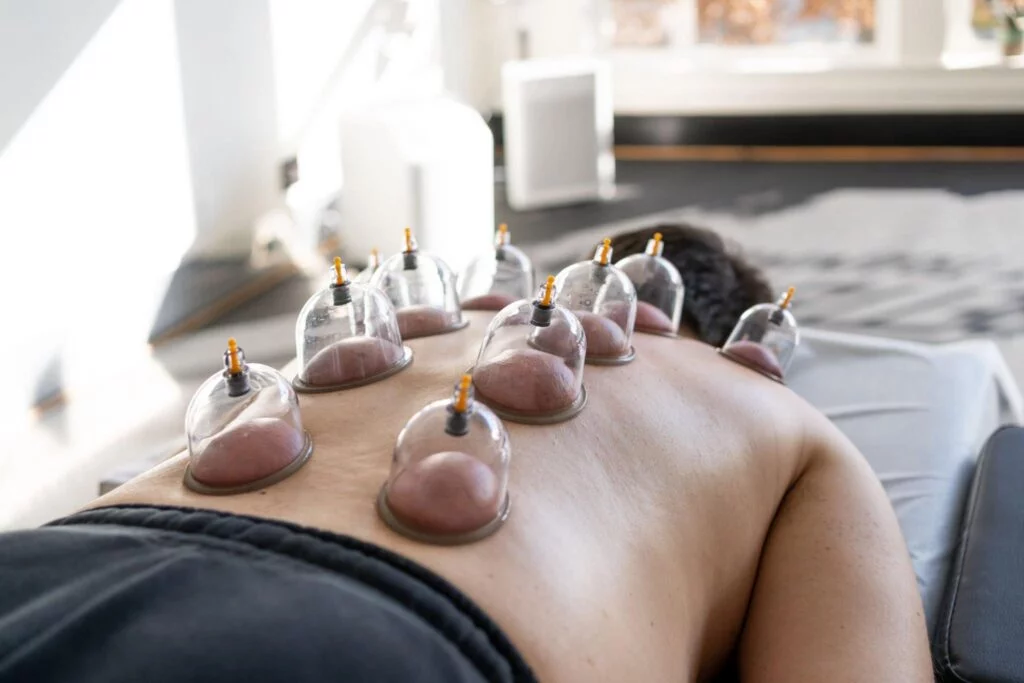
Hijama is the Arabic word for cupping therapy. A trained practitioner places small cups on specific points of your skin, usually on the back, shoulders, or neck. The cups create gentle suction, which pulls the skin and the tissue just beneath it slightly upward into the cup.

In dry Hijama, the cup is placed and removed without breaking the skin. In wet Hijama (the type most closely linked to the Sunnah), the practitioner makes a few very light, shallow surface scratches after the first suction, then reapplies the cup so a small amount of stagnant blood is drawn out. The whole process is quick, controlled, and performed with single-use, sterile tools.

People have used cupping for thousands of years — there is evidence of similar practices in ancient Egypt, China, and the Middle East. But for Muslims, Hijama holds a special place because it was personally recommended and practiced by the Prophet Muhammad (peace be upon him), which is why it is often called “Prophetic medicine.”

wet hijama in abu dhabi at house of nature medical center llc

2. Hijama in the Sunnah: What the Prophetic Tradition Says

Hijama is one of the most well-documented health practices in the Sunnah. Several authentic hadith describe the Prophet Muhammad (peace be upon him) both receiving cupping himself and encouraging his companions to do the same. Scholars often point to the following narrations:

  • Anas ibn Malik reported the Prophet (peace be upon him) describing cupping as being among the very best treatments available to people (recorded in Sahih al-Bukhari).
  • Ibn Abbas narrated that the Prophet (peace be upon him) mentioned three sources of healing — cupping, drinking honey, and cauterisation — while noting he personally discouraged cauterisation for his followers (recorded in Sahih al-Bukhari and Sunan Ibn Majah).
  • Several narrations describe the Prophet (peace be upon him) having cupping performed on his neck, upper back, and head at different points in his life (recorded in Sunan Abi Dawud and Sunan Ibn Majah).
  • Other narrations encourage seeking cupping around the 17th, 19th, and 21st of the Islamic lunar month, which developed into the tradition of “Sunnah days” observed by many practitioners today.
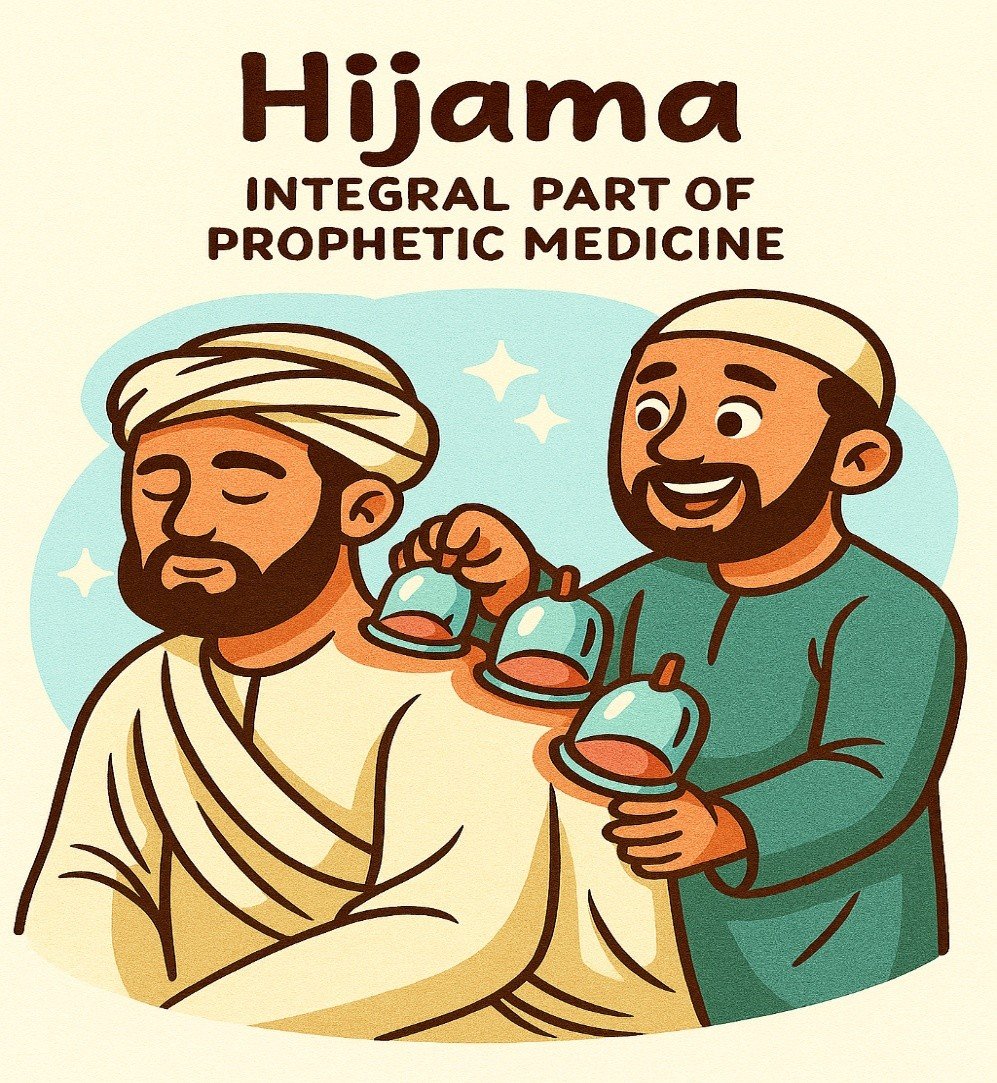
Hijama integral part of prophetic medicine

3. Types of Hijama at House of Nature

Not all cupping is the same. At House of Nature, we offer several forms of Hijama, and your practitioner will recommend the right one for you after a short consultation.

Type What Happens Best For Duration
Dry Cupping
Cups create suction on the skin; no scratches or blood is drawn
First-time patients, general muscle tension, mild pain
15–25 min
Wet Hijama (Sunnah Cupping)
Light surface scratches followed by gentle suction to draw out a small amount of stagnant blood
General wellness, detox, pain relief, following the Sunnah
30–45 min
Sliding (Massage) Cupping
Oil is applied first, then cups are glided across the muscle rather than left static
Muscle tightness, circulation, sports recovery
20–30 min
Facial Cupping
Very small cups used gently on the face
Skin glow, puffiness, relaxation
15–20 min

4. The Science Behind Hijama: How Cupping Works on the Body

Modern researchers are still studying exactly how cupping produces its effects, but a few explanations are commonly discussed in the scientific literature:

  • Local blood flow: the suction draws blood toward the surface of the skin, which may temporarily boost circulation in that area.
  • Pain gate theory: the pressure and mild sensation from the cups may help “crowd out” pain signals travelling to the brain, similar to how rubbing a bumped knee can ease the sting.
  • Muscle and fascia release: the upward pull may loosen tight muscle fibres and the connective tissue (fascia) surrounding them.
  • Reduced inflammation markers: some small studies report short-term drops in local inflammatory substances after cupping sessions.
  •  
  • Ibn Abbas narrated that the Prophet (peace be upon him) mentioned three sources of healing — cupping, drinking honey, and cauterisation — while noting he personally discouraged cauterisation for his followers (recorded in Sahih al-Bukhari and Sunan Ibn Majah).
  • Several narrations describe the Prophet (peace be upon him) having cupping performed on his neck, upper back, and head at different points in his life (recorded in Sunan Abi Dawud and Sunan Ibn Majah).
  • Other narrations encourage seeking cupping around the 17th, 19th, and 21st of the Islamic lunar month, which developed into the tradition of “Sunnah days” observed by many practitioners today.

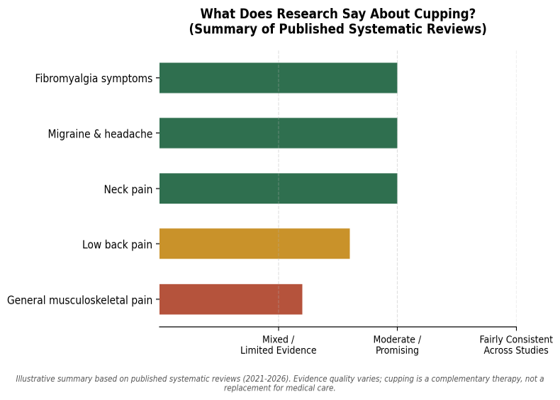
So what does the actual research show? Several systematic reviews (studies that combine the results of many smaller clinical trials) have looked at cupping between 2021 and 2026. The honest picture is mixed but genuinely interesting: cupping shows fairly consistent, promising results for conditions like neck pain, migraines, and fibromyalgia symptoms, and reasonable support for chronic low back pain. For general musculoskeletal pain overall, the evidence is more limited — some reviews describe it as inconclusive, while others report modest benefits, often noting that study quality still needs to improve. Cupping is best understood today as a complementary therapy with encouraging early evidence, not a proven cure for any specific disease.
5. Hijama for Specific Health Concerns

People in Abu Dhabi seek Hijama for many different reasons. The table below summarises the concerns we see most often and the general approach taken.

Concern How Hijama May Help Typical Sessions
Back, neck & shoulder pain
Targeted cups placed over tight muscles to ease tension and improve local blood flow
3–6 sessions
Headaches & migraines
Cupping near the neck, shoulders, and temples to relieve muscular tension linked to headaches
3–5 sessions
Stress & poor sleep
The calming, hands-on nature of the session paired with rest afterward supports relaxation
2–4 sessions
Sports recovery & stiffness
Sliding cupping helps loosen fatigued muscles after intense training
As needed
General detox & wellness
Wet Hijama on the Sunnah days as a seasonal wellness routine
Monthly or seasonal

Hijama is a complementary therapy. It works alongside — never as a replacement for — any medication or treatment prescribed by your doctor. Always continue your prescribed care and mention any Hijama sessions to your treating physician.
6. The Best Time for Hijama: Sunnah Days Explained

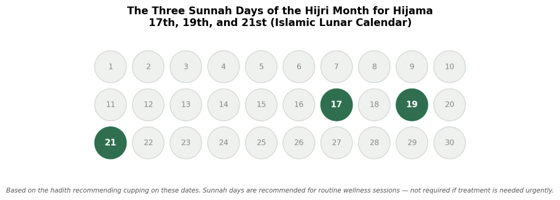
Many patients ask us about “Sunnah days” — specific dates on the Islamic lunar calendar traditionally linked to cupping. These are the 17th, 19th, and 21st of each Hijri month. The idea comes from several hadith encouraging cupping around these dates, and classical scholars such as Ibn al-Qayyim noted that cupping performed in the second half of the lunar month appeared more beneficial in the observations of physicians of that era.

It is worth remembering that Sunnah days are a recommendation, not a requirement. If you are in pain or need treatment, classical scholars agree you should not wait for a specific date — book whenever you need relief. Sunnah days are simply a nice option to align a routine wellness session with tradition.

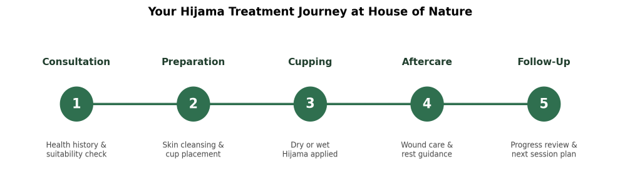
7. Your Hijama Treatment Journey at House of Nature

A Hijama session at House of Nature is simple, respectful of your comfort, and always explained step by step before we begin.

Stage What Happens
1. Consultation
A short discussion about your health history, current concerns, and any medications, so we can confirm Hijama is right for you
2. Preparation
The treatment area is cleaned; you relax comfortably while the practitioner prepares sterile, single-use cups
3. Cupping
Cups are placed on the chosen points; dry suction is applied, and for wet Hijama, light surface scratches follow before a second, brief suction
4. Aftercare
The area is cleaned and covered; you receive simple guidance on rest, hydration, and what to expect over the next 24–48 hours
5. Follow-Up
We review your progress and, if needed, plan your next session based on how your body responded

8. Is Hijama Safe? What to Expect and Possible Side Effects

When performed by a trained practitioner using sterile, single-use equipment, Hijama is generally well tolerated. That said, it is helpful to know what a normal recovery looks like:

  • Round, temporary marks or light bruising where the cups were placed — these usually fade within a few days to two weeks.
  • Mild tenderness in the treated area for a day or two, similar to how a deep massage can feel afterward.
  • For wet Hijama, a small, clean surface mark that heals like a minor scrape, usually within a few days with basic aftercare.
  • Rarely, some people feel briefly light-headed after a session, which is why we ask patients to rest and hydrate after

9. Who Is Hijama Suitable For?

Patient Profile Why Hijama May Help
Adults with muscle or joint tension
Targeted cupping over tight areas to support relaxation and circulation
Those observing the Sunnah
A chance to follow a Prophetic tradition under safe, doctor-supervised conditions
People under regular stress
The calm, structured session supports rest and recovery
Athletes & active individuals
Sliding cupping to ease muscle fatigue after training
Health-conscious individuals
Seasonal or monthly sessions as part of a general wellness routine

Hijama is not suitable for young children, pregnant women without medical clearance, people with active bleeding disorders, or those on strong blood-thinning medication. Our team always screens for these factors before any wet Hijama session.

10. Frequently Asked Questions

Does Hijama hurt?

Most patients describe the sensation as a firm pulling or tightness rather than sharp pain. Wet Hijama involves only light, shallow surface scratches, and most people find the session comfortable and even relaxing.

How many sessions will I need?

This depends on your goal. A single session can help with general relaxation, while ongoing concerns like muscle tension or stress often benefit from 3–6 sessions spaced a few weeks apart.

Can I have Hijama while fasting?

Yes. Several authentic hadith describe the Prophet (peace be upon him) being cupped while fasting. Some people prefer to avoid it during a strict fast if they feel weak, but it is not prohibited.

Is Hijama the same as a massage?

No. While both involve touch and relaxation, Hijama uses suction (and light scratching in the wet form) to work beneath the surface of the skin, and it follows specific point placements rather than general massage strokes.

Can women have Hijama?

Yes. Hijama is suitable for women, and female practitioners are available on request at House of Nature.

Is Hijama safe for people with health conditions?

Many people with common health conditions can safely have Hijama, but certain conditions — such as bleeding disorders or use of blood thinners — require a doctor’s review first. Our screening process is designed to catch this before treatment begins.

Start Your Healing Journey

Experience natural, holistic care with our DOH-licensed experts in Ayurveda, Chiropractic, Naturopathy, and more—right here in Abu Dhabi.